
Baruch de Spinoza (1632 – 1677)
“Don't think that heresies could arise from a few small souls running around. Only great men have produced heresies”.
Augustine
Those who follow the initiatory path cannot avoid studying the biographies of great torchbearers of spiritual light who have preceded mankind in spiritual development and who point the way to the future.
One of these truly great men is the Jewish-Dutch philosopher Baruch de Spinoza (Nov. 24, 1632 – Feb. 21, 1677).
His biography proves that he not only cherished truly timeless spiritual ideas, but above all manifested them at the risk and peril of his own life. He was persecuted as a “heretic”, a term which at the time meant the worst possible disrespect and constant homelessness. It was said that he had created the most religious heretic philosophy of all time.
The name “heretic” is derived from the name Cathar, which originally meant the pure who abstained from all defilement. The fact that the word “heretic” could arise from the name Cathar and thus become a term for all heretics clearly shows the importance of this movement and that these heretics represented such a serious crisis for the official church in certain areas of the West that their existence was endangered and therefore all heretics were mercilessly hunted down and executed.
The following biography of Baruch Spinoza reveals the development of his philosophy of life from the ONE SUBSTANCE, the freedom of the spirit.
Spinoza's sigil is also of interest. It shows a sequence of letters arranged in the shape of a cross within a circle, with a blossoming rose in the middle and the Latin word “Caute” underneath, which translates as “Be careful, be mindful”.
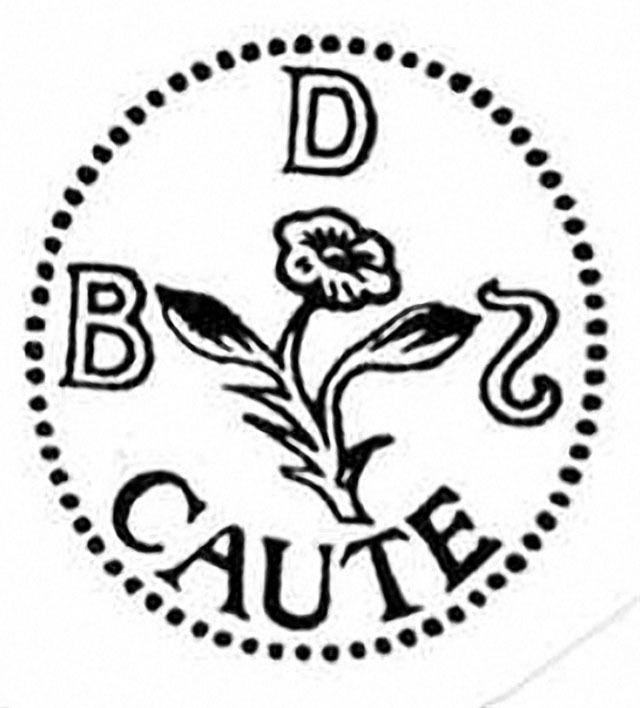
ALL-UNITY AND PARTICIPATION
“...There is only ONE infinite substance, which excludes all determination and negation of itself, which is called God and is the One Being in all existence”
Spinoza's philosophy of the art of living, as he called it, was primarily aimed at showing people the way to inner freedom and happiness. His motto: “Bene agere et laetari!” (Act well and rejoice!). For him, the wisdom of the free man was “not a contemplation of death, but a contemplation of life”, which he himself did until the last moment.
His philosophical writings, which he had only intended to publish after his death due to their explosive nature, were banned as soon as they appeared. It took almost a century before they were rediscovered. Gotthold Ephraim Lessing’s assertion in the 18th century set the ball rolling:
“For him there was no other philosophy than Spinoza's”.
This remark triggered the “great Spinoza controversy” between the philosopher Heinrich Jacobi and Moses Mendelssohn. This sparked a general interest in Spinoza in modern intellectual history and his impact on philosophy and poetry has not diminished to this day.
Thus, Hegel claims in his Lectures on the History of Philosophy:
“...If one begins to philosophize, one must first have been a Spinozist...In general, Spinoza is such a main point of modern philosophy that one can indeed say: You either have Spinozism or no philosophy at all”.
So who was this Baruch de Spinoza? A cursed heretic or an exemplary saint?
His short life (he only lived 45 years) is surrounded by that mysterious semi-darkness that Rembrandt and Vermeer also painted (contemporaries of Spinoza) and which seems to point to a higher world. This certainty of belonging to a higher world also allowed Spinoza to bear the tragic fate of not being understood with superior calm and composure. The inner security, which cannot be shaken by anything, was granted to Spinoza because he really regarded all things, as he repeatedly emphasized in his Ethics, his moral philosophy, “sub specie aeternitatis” (from the point of view of eternity).
1. Spinoza's metaphysics and the spirit of geometry
Spinoza's philosophy is above all metaphysics. Based on Aristotle, metaphysics is understood as “first philosophy”, insofar as it inquires into the first grounds and origins of being.
What is Spinoza's fundamental thesis on which his metaphysics is based? There is only ONE infinite substance, which is also called God and is the ONE BEING IN EVERYTHING.
Spinoza adopted the concept of substance from the Scholastics. (The name “scholasticism” is derived from the Latin name “schola”, which was the medieval school of philosophy (e.g. the famous school of Chartres) in which attempts were made to prove faith by means of reason). Motto: “You can only believe what you have understood”.
In other words, “substance” was not used to describe a material reality, but rather a purely spiritual principle, the unconditional unity of being, the unity of the universe.
This concept of God as the spiritual principle of the one infinite substance stands in critical contrast to Descartes, who distinguished between thought (res cogitans) and spatial extension (res extensa) (mind/thought and matter) as two substances. For Spinoza, on the other hand, thought and extension are substantially indistinguishable. (Dualism versus monism) Not that he goes back at all behind Descartes’ distinction of the world of consciousness from the world of the body, the material nature. (For him, thought (immaterial) and extension (material) are nothing other than two attributes (determinations of essence) of the one and only spiritual substance: Spinoza also describes it this way: thought and extension are only different expressions of the one substance. This makes it clear that this “one” is differentiated in itself and can therefore find expression in different ways.
He expressed this doctrine of the one substance in his famous formula “deus sive natura?” (God or nature). But I will come back to this later.
Spinoza's philosophy is referred to as “absolute” rationalism (“ratio” means “reason” in Latin) because it is based on the universal comprehensibility, rational structure of the world as a whole.
(The classical way of thinking of the Enlightenment, for example, is rationalism).
This conviction determines not only the content, but even the form of presentation of Spinoza's doctrine. He presents them “more geometrico demonstrate”, in the manner of geometry. Like Euclid in his Elements, the fundamental ancient geometry book, Spinoza begins by giving definitions and establishing axioms (i.e. basic laws that cannot be derived further). From these, the entire sequence of successive theorems is then derived and proven. Something original to pure reason, the Euclidean logic of proof, thus appears to be appropriate not only to the ideal formations of geometry (self-generated by the mind), but also to reality. Just like the two other rationalists Descartes (approx. 30 years older) and Leibniz (approx. 10 years younger), Spinoza does not understand “ideas” (i.e. concepts and notions) as images that arise directly or ultimately from sensory impressions. “Ideas”, mental conceptions, are concepts of the mind.
Another explanation of the term “rationalism”. We distinguish between a finite mind, which is rooted in sensuality, and a comprehensive reason, which, according to Kant, is elevated to the capacity to recognize the absolute and is often used synonymously with the term “spirit”, as does Spinoza.
So that these explanations do not become too top-heavy, the development of Spinoza’s teachings will be illustrated using the eventful life story of the heretic philosopher. This is linked to the history of the Portuguese-Jewish community in Amsterdam and the rise of the independent Dutch Republic to become a major European power with powerful colonial possessions.
(Golden Age - Rembrandt/Vermeer)
2. History of the Netherlands and the Jewish Community at a glance
a) Formation of a jewish community in Amsterdam
b) Independence and rise of the Netherlands to become a major European power (liberal policies of the Loevenstein/De Witt ruling family)
Before 1600 there were no Jews in Amsterdam.
In 1492 - the year of the discovery of America - the Spanish king had given the Jews an ultimatum: Christianization or exile. The Portuguese king followed this in 1497. The ancestors of the Sephardic (Iberian-Jewish) immigrants in the Netherlands had chosen conversion over exile. When the Spanish and Portuguese inquisitors, always on the lookout for heretics, began to keep a closer eye on these converts, often ending in violence, many of them fled. A large number of these converted Jews fled to Antwerp in the middle of the 16th century, which at that time still belonged to the loyal part of Spanish Netherlands. They hoped to be able to carry out their business there with less harassment.
When the rebellious United Provinces of the Netherlands in the north gained the upper hand in their struggle for independence from the House of Habsburg-Spain towards the end of the 16th century, the new immigrants fled again, this time towards Amsterdam, which by then had already overtaken Antwerp in importance as the commercial trading center of northern Europe.
What did the Portuguese Jews hope to find in Amsterdam? It was not only the opportunity to regain the commercial success they had enjoyed in the old Heimal, but also to enjoy the famous Dutch tolerance which, in Article 13 of the founding principles of the new Dutch Republic of 1579, explicitly states “that every individual has the right to religious freedom”.
This was an extremely unusual statement in Europe at the time and therefore attracted countless freethinkers.
In 1619, the city of Amsterdam then granted its Jewish immigrants the right to practice their religion openly. At that time, there were already 500 former converts in the Vlooienburg district, where the Spinozas also lived. (Spinoza’s father had immigrated as a young boy)
It was in no way a ghetto. The Jews were not forced to live in this part of the city. They were all very industrious and experienced merchants, the wealthier ones of whom lived in large, stately mansions in the upper canals.
The Jewish immigrants made a considerable contribution to the economic upswing of the young nation to become a great power, much to the detriment of their old homeland Spain.
The Jews had a monopoly on tobacco, tobacco cutting factories, the silk and sugar industry as well as the diamond industry, a monopoly which they have been able to maintain to this day.
3. Spinoza’s biography
a) Youth and education in Amsterdam
Baruch de Spinoza was born here in Vlooienburg on November 24, 1632, as the middle son of a respected merchant family (as Sephardim). Bento, as he was called as a boy by the Portuguese-Jewish immigrants, attracted attention very early on through his sensitivity and great talent. The port. The Portuguese Jews had both Portuguese and Jewish names
Spinoza's formal education was as follows:
1639-1646 Spinoza attends the Torah school “Ets Haim”, (7 years). The main subjects taught here were Hebrew and the Torah, i.e. the Pentateuch (5 books of Moses, the Prophets and the Law)
1646-1649 Spinoza attends the “yeshiva” of Rabbi
Morteira. (3 years)
After the 13th year, the religious maturity (the Bar Mitzva),
Talmud study begins.
Talmud (Hebrew: learning, teaching) refers to the post-biblical commentaries, regulations and laws that were collected until after 500 AD. It is an encyclopedia of knowledge.
1648 End of the 30-year war/Westphalian peace.
The Republic of the United Netherlands becomes sovereign with powerful colonial possessions. (The so-called Golden Age). (East Indian and West Indian Company - foundation of Niew Amsterdam, which will one day be called New York. It was bought from the Indians with 20 guilders).
Example: Around 1650, the number of Dutch ships amounted to 16,000, which was more than the total number of all other European fleets.
b) 1649 First turning point in Spinoza's life: (17 y.)
Due to the death of his half-brother Isaac, Spinoza had to leave the Talmud School and join his father's import-export business. Now Spinoza's horizons widen at a stroke. At the stock exchange he meets with protest. Freethinkers (the so-called Collegians). The name derives from the colleges in which they met. They were Mennonites, Protestant freethinkers who knew no religious hierarchy and were relatively unbound by ideology.
It is important to note that free thought in the Netherlands was at a crossroads around the middle of the 17th century. In the late Middle Ages, the 16th century and the first decades of the 17th century, it was often a matter for sects and eccentrics from the lowest strata of the population. Then there was a transition of free, critical thinking from the lower classes to the upper social classes. Explanation: science had become the property and tool of the patriciate. Agnosticism grew (the essence of existence is not recognizable.) Science thus acquired an aristocratic character at the time when Spinozism emerged. Some scientists hold the highest offices. The mathematician de Witt, for example, was a council pensioner and governed the Republic. Christiaan Huygens moved in aristocratic and court circles in the Netherlands and France, while the lower classes were pro-Ormanian (loyal to the king) and Calvinist. (The Calvinists are Protestants. Reformed, very strict on morals and adherents of the doctrine of predestination - their success in the world is indicative of their redemptive character, which is why the Calvinists are constantly driven to be economically successful. - large adherents in Western Europe and North America).
This conflict between the liberal freethinkers of the upper classes (with whom Spinoza is associated) and the Calvinist lower classes loyal to the king is something we need to keep in mind. It plays directly into Spinoza's life.
For the young Spinoza, working as a merchant in his father's business was in no way fulfilling. In every free minute, he quenched his insatiable thirst for knowledge. He pursues self-study to an extent that is almost unimaginable for us. His talent for languages comes to his aid: Portuguese as his mother tongue, Spanish as an official language, Hebrew, Dutch in everyday life, some Italian, a little French, possibly German, and later Latin.
Influences on his thinking include: The pre-Socratic natural philosophers, the jewish Rationalists (such as Maimonides), jewish mysticism, the Kabbalah.
Also included were the most important teachings of Hellenism: the Stoic philosophy. (The Stoic doctrine had a great influence on late antiquity. Stoicism includes names such as Epictetus, Seneca and Marcus Aurelius) and Epicurean teachings with a shift towards ethics. (Epicurus taught that gaining pleasure and avoiding pain and suffering should be the highest goal).
In the Renaissance with Campanella and Telesio, Spinoza finds the ideal of human self-perfection. This Renaissance ideal is, in its original form, the philosophy of self-preservation, the “suum esse conservare” as the first, deepest drive that inspires human endeavor in all its gradations (the striving for knowledge of oneself and of the universe). These ideas are later developed further in Spinoza's mature metaphysics. The doctrine of self-preservation plays a central role in Spinoza's philosophy. In Ethics, his main work, he would later refine it further. If Spinoza had spoken our language, he would not have shied away from speaking of “self-realization” instead of self-preservation. But whereas today this expression often refers only to the fulfilment of subjective desires, Spinoza was convinced that man realizes his essence by assuring himself of his connection with the eternal and infinite, i.e. with God (or as Spinoza says, the one substance).
In order to achieve the goal thus characterized of self-perfection/self-knowledge and thus participation in eternal life (in the unity), that is what Spinoza strove for in the following years.
When he finished his main work, Ethics, he believed he had achieved it, as can be seen from the sentences with which he concluded it: “the wise man...is hardly moved in his mind, but is incessantly aware of himself, God and things with a certain eternal necessity and always enjoys true peace of mind. Even if the path I have pointed out that leads to this goal seems to be extremely arduous, it can still be found. Of course, what is so rarely discovered must be arduous. How else would it be possible that salvation...is almost universally neglected? But all excellence is as difficult as it is rare”. (see Sigel, explanation)
The 20-year-old Spinoza frequented the “Cafe der Spoetter” in Amsterdam, as the Jan Rieuwert bookshop was called. This was the center of collegians, scientists and liberals. Banned books were printed and distributed here under the pseudonym Heinrich Khunrath, Hamburg. Spinoza's Philosophical-Political Treatise, a work that caused a scandal throughout Europe, was later printed here anonymously.
1652-1654 First naval war with England
(Spinoza 20 - 22 years old)
c) 1654 2nd turning point in Spinoza's life, the death of his father.
Baruch/Bento is 22 years old. There is no good relationship with his father. He is a reserved man, very pious and involved in the Jewish community. He is involved in the Jewish community. He married 3 times (Spinoza's mother died when he was 6 years old). Since then, it was no longer a real home for Spinoza, and the house was always very turbulent with his half-siblings.
Spinoza makes the acquaintance of Dr. Franciscus van den Enden, who will have a decisive influence on his life. (Ex-Jesuit, lawyer and doctor, 6 children) He is a very extroverted character, an influential free spirit who fascinates everyone and runs a prestigious Latin school for the patricians in Amsterdam.
Dr. van den Enden becomes Spinoza's most important mentor and surrogate father.
4. Cherem/the great curse
1656 Spinoza is cursed and banished from the synagogue and the great ban - CHEREM - is pronounced on him.
This was preceded by many warnings, and he was even offered a lifetime pension if only he would show “repentance” and return to the fold of the community. Spinoza stuck to his heretical thoughts. And then the terrible curse came into effect, the like of which had never before and would never afterwards be pronounced by the Portuguese-Jewish community in Amsterdam. It was also translated into Portuguese:
“According to the decision of the angels and the judgment of the saints, we banish, curse, execrate and cast out Baruch de Spinoza with the consent of the holy God and this whole holy church before the holy books of the law and the 613 precepts contained therein, with the curse with which Joshua cursed Jericho, with the curse with which Elisha cursed the boy, and with all the curses that are written in the law. Cursed is he by day, and cursed is he by night; cursed is he when he lies down, and cursed is he when he rises up; cursed is he when he goes out, and cursed is he when he comes in. May God never pardon him, may the anger and wrath of God be kindled against this man, and may all the curses that are written in the book of the law be laid upon him, and may his name be blotted out from under heaven, and may God separate him for his destruction from all the tribes of Israel, with all the curses of heaven that are written in the book of the law. But you who follow the Lord your God, all of you are blessed today. We warn you that no one should communicate with him verbally or in writing, no one should show him any favor, no one should stay under the same roof with him, no one should come within a cubit of him, no one should read any writing written by him”.
After these words were read out on July 27, 1656 (24 years) (as reported in the first biography of Spinoza), “the candles (black ones) in the synagogue went out one by one. They were extinguished in a bowl filled with blood until the whole room lay in deep darkness. The shofaroth (ram’s horns) wailed shrilly. The chief rabbi intoned the text in a hollow voice, the congregation (a full number) answered each passage with an angry ‘Amen’”.
In the worst cases, the cursed man had to lie on the threshold of the synagogue as a doormat and let men and boys walk over him. As an eight-year-old, Spinoza himself had stepped over Uriel da Costa, a heretic from the Jewish-Portuguese community, who had recanted twice and had himself been cursed. He recanted twice and later took his own life.
It should be noted that the ban and the banishing ritual were primarily symbolic and were intended to persuade the heretic to change his mind in a drastic way.
It was a purely political decision by a persecuted minority religion, which Spinoza regarded as a destructive element both within the community and externally.
(Incidentally, the curse was never lifted, despite Ben Gurion’s attempts to do so in the 1950s)
Back to Spinoza:
From then on, he had to live under this spell. It indicates the spiritual place of his existence, and everything he thought happened under this sign. He changed his name from Baruch (Hebrew: the blessed one) to Benedict (the one who is probably spoken of as the praised one - which referred to his friendships with influential Protestants). By changing his name, he wanted to signal his final distance from Judaism.
However, one thing must be made clear: Spinoza never sympathized with Christianity as a religious community, nor with Judaism. His devotion was to the moral teachings of Jesus, not to theology or the promise of salvation. The theological aspect of religions was meaningless to him.
Spinoza responded to the curse, writing an “Apologia”(Justification) in Spanish. He never receives an answer.
Later, in Spinoza's Theological-Political Treatise, which appears anonymously and causes a sensation throughout Europe, many ideas from the “Apologia” are taken up again. (Conclusion: he denied the Jewish community the right to banish anyone and to act as a legal power with its own legal regulations alongside those of the civil state).
The Theological-Political Treatise opens up biblical criticism in intellectual history. Spinoza begins to systematically pursue this work by demanding a critical method of scriptural exegesis and formulating the principle of biblical criticism with complete clarity:
He openly declares “that the Word of God is faulty, mutilated, falsified and contradictory”. Spinoza not only makes a bold assertion, but he also goes to great lengths to prove it. He astutely shows how the holy books “were not written by one man (Moses) and not for the people of a single age, but by several men of different minds and from different ages”. The bold critic also questions Israel’s central claim to be chosen. He ruthlessly destroys the idea of miracles, which occupy a large part of the Bible. He doubts the prophecies and the intervention of a personal God in earthly destiny. He rejects the power of a select group of priests as well as historical traditions, rituals etc., the concept of the “end of life”, and the substantial immortality of the soul.
(This was very bad for the Jews) Spinoza's explanation: immortality/duration of the soul can only refer to the plane of time and space. Eternity, however, does not mean unlimited duration, but “timeless”, beyond time. The eternal can only be understood in the eternal.
The effects of the curse: He loses his economic existence as well as all social relationships with his family and community.
He finds comfort and refuge in the friendship of the Collegians, who will continue to support him financially throughout his life.
He is admitted to Van Enden's Latin School (learns Latin/the language of science), where he is allowed to live with the family and take part in their very lively life. This period has been described as a one-man high school. Now Spinoza is introduced to Cartesianism and learns statecraft (Macchiavelli and Hobbes), to which he later developed his own philosophy of law and the state, which is still relevant today due to its liberal elements and statements on democracy. In return, Spinoza teaches his teacher Hebrew.
He also learns a trade to earn a living, the grinding of lenses. Leibniz later wrote that “the glasses of the ‘little Jew’ Spinoza were among the best in Europe”. The craft was highly regarded and suited his introverted nature and his scientific interest in optical instruments, which were in great demand in the emerging maritime power.
5. The hidden years / beginnings of Spinozism
1657-1660 The coming years are referred to as “the hidden years” (24 - 28 years). Spinoza develops his own system of thought. (Students/colleague-friends and supporters of the Loevesteiner circle in politics)
a) The Short Treatise on God, Man and His Happiness, an art of living and moral doctrine, is written. (It already contains all the ideas that he will then complete in ETHICS).
Quote:
“Man is a finite, thus limited being, whose cognition is limited; but he can form the thought of a more perfect human nature and strive to come close to the ideal of such a nature, namely a nature determined by the ‘knowledge of the unity of the spirit with the whole nature’”. This is expressed in the formula “Deus sive Natura” (God or Nature): Here Spinoza distinguishes between an invisible creating aspect of nature (natura naturans, active aspect) and the visible created aspect (natura naturata, passive aspect) (distinguish without separating). Spinoza does not separate God from nature, as theology does, especially since he also did not consider it permissible to use theological expressions when speaking as a philosopher. But he defends himself against the accusation that he equates God and nature (the accusation of pantheism). He himself clearly defended himself against the identification of God and nature in his letters:
Quote: “I conceive of God as the immanent and not the external cause of all things. But if there are people who think that the Theological-Political Treatise assumes that God and nature are one and the same, they are completely mistaken.”
6. The 2nd ban, banishment from Amsterdam
The stages of his exile:
a) the fruitful Rijnsburg years/finds the appropriate form for his teachings: “more geometrico demonstrate” (presented according to the geometric spirit).
1660 After the second ban, prompted by the intervention of the rabbis at the council pensioner, the 28-year-old Spinoza no longer wished to return to Amsterdam, but wanted to settle in a place where he could work in peace on the reworking of his concept of the art of living.
His colleague/freethinker friends provided him with a refuge in the village of Rijnsburg near Leiden. The three years that Spinoza spent there are considered to be the most fruitful in terms of the development of his philosophy. He revises his system of thought “in a geometrical manner”. The beginnings of his main work ETHICS are written.
1661 He corresponds with renowned European scientists and philosophers, e.g. Heinrich Oldenburg (until 1665), Secretary of the Royal Society in London, who, however, does not understand Spinoza’s ideas. Oldenburg was an excellent organizer, but not an independent thinker.
The reflections in a fragmentary early writing, which was perhaps his earliest, namely the Treatise on the Improvement of the Mind outline a philosophical program that Spinoza realized with impressive consistency in the course of the following years; because of their authenticity and clarity, they are particularly suitable for presenting Spinoza's philosophical thinking.
“After experience had taught me that everything that frequently occurs in ordinary life is vain and void...I finally decided to investigate whether there was not something that was truly good and that could be shared in itself...indeed, whether there is not something which, if I had found and appropriated it, I could enjoy forever with the highest and lasting pleasure”.
This is the basic motif of his philosophical thinking. On the one hand, it is about finding something that is truly good, in contrast to transient goods; on the other hand, once such a good (summum bonum) has been found, it is a matter of appropriating it or uniting with it and achieving happiness in this union (amor dei).
1663 He dictates to Caesarius his interpretation of Descartes’ Principia, which is published in the same year, the only work to appear under Spinoza's name during his lifetime. (In the preface, however, he distances himself from Descartes’ ideas (dualism of mind and matter) and refers to his own philosophy of monism, the doctrine of one substance.
The Short Treatise on God, Man and his Happiness is also revised according to the geometric method.
b) He moves again, this time to Voorburg. Once again, his collegiate friends help him and provide him with an apartment.
1664-1667 Second naval war with England. Loss of the American colonies (New York).
1666 Spinoza stops working on the ETHICS, presumably at the request of the Wittian rulers, in order to deal with political issues. These are later elaborated in the Political Treatise and the Ethics. It is a political theory of democracy in connection with liberalism, whose influence extends into the Weimar Republic.
(The author of the 21st draft of the Weimar Constitution, the first democracy on German soil, refers to Spinoza three times: “Oboedientia facit imperantem” (It is not commanding that characterizes the ruler, but that his command finds obedience).
Here in Voorburg, at the age of 34, his lung disease, which he had inherited from his early deceased mother and which was aggravated by his work with the fine dust of the lens grinding factory, also broke out.
c) Trial and death of Spinoza’s closest student Koerbagh in Amsterdam / move to The Hague
1668 His students in Amsterdam get into trouble. There are trials. Adriaan Koerbagh, the most ardent supporter among the Spinozists, dies in prison, which affects Spinoza greatly.
1669 The 37-year-old Spinoza moves to The Hague for the last time, staying with a portrait painter and his family, also a collegian. He lives here until his early death.
7. The Theological-Political Treatise is published anonymously
1670 Although the treatise is published anonymously in the Jan Riuewert bookshop under the pseudonym Heinrich Khunrath Verlag, Hamburg, everyone knows who the author is. There is a veritable scandal that spreads far beyond Europe, so that many well-known personalities distance themselves from Spinoza as a result.
a) Crisis in Dutch liberal politics
(Assassination of the ruling DeWitt brothers and rise of the Orange Prince Wilhelm III.)
1672 A year of crisis for the Dutch Republic: Louis XIV has problems at home (he exports the war) and calls for war in Europe against the young United Republic of the Netherlands. He has already divided up the country. England, Cologne and Münster are his allies. There are tumultuous uprisings in the Netherlands due to the chaos of war. The people believe that the liberal DeWitt government is to blame for all the misery due to its godlessness. The council pensioner, Johan de Witt, and his brother are mauled by the mob in the streets. Their hearts are torn out and presented to the crowd as “traitorous”.
The ever-controlled Spinoza loses his temper for the first time. He wants to run into the street with a placard on which he has written the words “Ultimi Barbarorum” (The worst of the barbarians!) in large letters. His landlords in The Hague hold him back and lock him up. In this way they save his life.
The dictatorial rise of the Orange Prince William III ensues. The freethinkers and liberals come under fire from the conservatives and Calvinists. Nevertheless, Spinoza continues to be secretly visited by many students and followers in The Hague.
b) Spinoza rejects appointment to Heidelberg
1673 Spinoza declines an appointment as professor in Heidelberg offered to him by the Elector Palatine Karl-Ludwig.
c) On a secret mission in the French camp in Utrecht
He visits the French camp in Utrecht on a secret mission He refuses to dedicate a book to Louis XIV in return for a French pension (annual allowance).
1674 The Theological-Political Treatise is finally banned (probably on the orders of William III).
The hour of Spinozism as a new, free, tolerated school of thought in the Netherlands was over. If even free-minded but thoroughly credible scholars of God were sent away from the universities as lecturers under the Orange reaction, one can imagine the cloud under which Spinoza's existence came to an end. The stoic courage with which he endured illness and public scorn is admirable.
He testified to his simple way of life: “I do like the snake that has its tail in its mouth; at the end of the year I try to have nothing left but what is necessary for an honest burial”.
8. In 1675 (2 years before his death) his main work, the Ethics, (his doctrine on the art of living) was completed.
It is the teaching of a universal practical, non-imperative philosophy for a future generation, as Spinoza formulates it. (Publication is excluded. Peace with England brings renewed correspondence with Oldenburg. New, renowned students from important circles arrive.
1676 Leibniz visits Spinoza in The Hague: they have a “debate on substance”, for a long time he defends Spinoza’s views of an impersonal God. Spinoza works on the (unfinished) Political Treatise, a Hebraic grammar and a treatise on the rainbow.
His lung disease worsens.
9. February 21, 1677: Spinoza’s death at the age of 45.
The friends of the Kollegianten ensure an honorable burial. They follow the coffin in 6 carriages. Also due to their influence, Spinoza is given a burial place in the new church in The Hague.
However, after his death, other well-known personalities with whom Spinoza had corresponded during his lifetime urged his executor, a student of Spinoza, to remove their names from the correspondence or to publish their letters.
They did not wish to be publicly associated with Spinoza. His doctrine of an “impersonal God” was equated with “atheism” by his contemporaries.
Summary of Spinoza's philosophy:
It occupies a special position in the history of philosophy.
It is an independent, very self-contained system. Spinoza does not belong to any school and did not found a new current.
The revolutionary aspect of Spinoza's philosophy:
He detaches philosophy from any convention of God.
In his theory of the art of living, ETHICS, problems are discussed that are still relevant today:
1. The relationship between man and nature (not a contradiction). Man is part of nature and can only be understood in connection with it.
2. Relationship between matter and consciousness (different definitions of both materialism and mentalism).
3. Relativization of individual scientific knowledge.
According to Spinoza, the science of material nature and the science of consciousness each grasp only one side of reality, so that under Spinoza's presuppositions it is just as impossible to reduce consciousness to material relationships as it is to allow matter to merge with the mind.
4. His program of a purely descriptive, non-imperative ethics.
5. Rejection of a moralizing psychology.
6 Spinoza called for scientific knowledge to be kept free of value judgments.
7. His philosophy of law and state with its liberal elements is still relevant today.
Spinoza's seal shows a sequence of letters arranged in the shape of a cross within a circle, with a blossoming rose in the center and the Latin word “caute” below it, which translates as “Be careful, be attentive”.
Spinoza's seal shows a sequence of letters arranged in the shape of a cross within a circle, with a blossoming rose in the center and the Latin word “caute” below it, which translates as “Be careful, be attentive”.
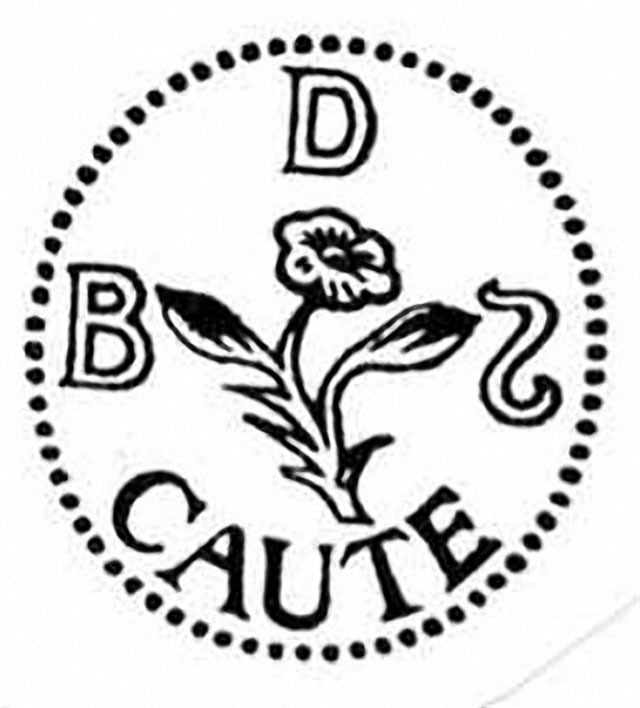
This admonition “caute”, to be careful, to be mindful, is also expressed in a verse of a poem by Rabindranath Tagore:
“Has no tidings yet reached you
That the rose reigns shining among thorns?
Arise, awake!
Do not let time pass in vain!”
 Print
Print 